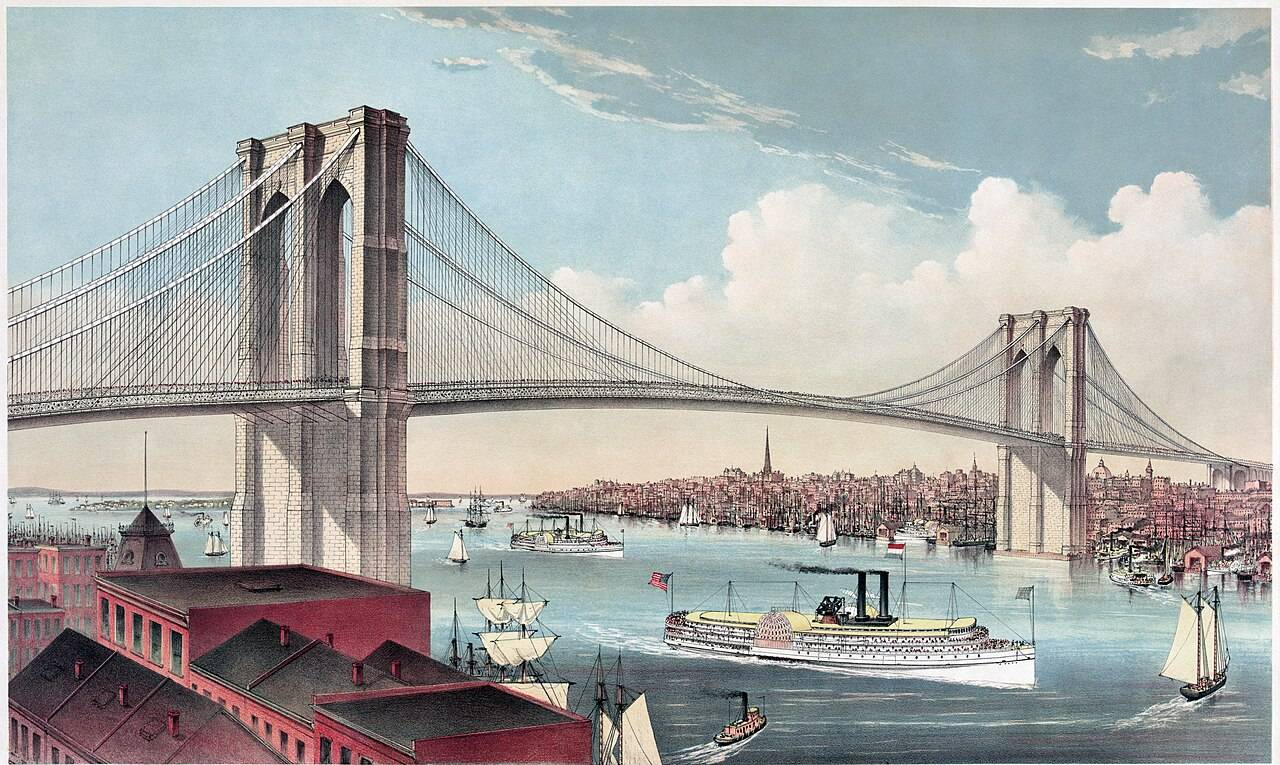
Strike your own.
The Hamilton logo is one portrait of Alexander Hamilton, drawn in rows of brass bars, the way a coin is struck. Pick a colour, drag or tap across him to repaint the rows, then snap your version.
The bars come in three weights: a hairline for shadow, a mid bar for half-light, a heavy bar for light. Together they draw the face from a 16px tab icon to a stage backdrop.
For fun. Every snap is stamped as fan art. For anything official, use the files as delivered.
Logo
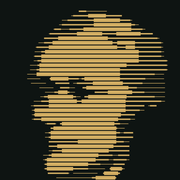
The portrait and the wordmark, with a brass full stop. One drawing of Alexander Hamilton, used the same way everywhere.
Use the full logo wherever there's room. The wordmark works in tight horizontal spaces. The portrait works from 16px on screen to a stage. Never redraw any of them: download the files.


 3216
Paper letters on night and ink letters on paper are the defaults. Green, brass and Continental blue grounds are for creative moments only: campaigns, merch, event screens.


The common mistakes. When in doubt, use the files exactly as delivered.
10HAMILTON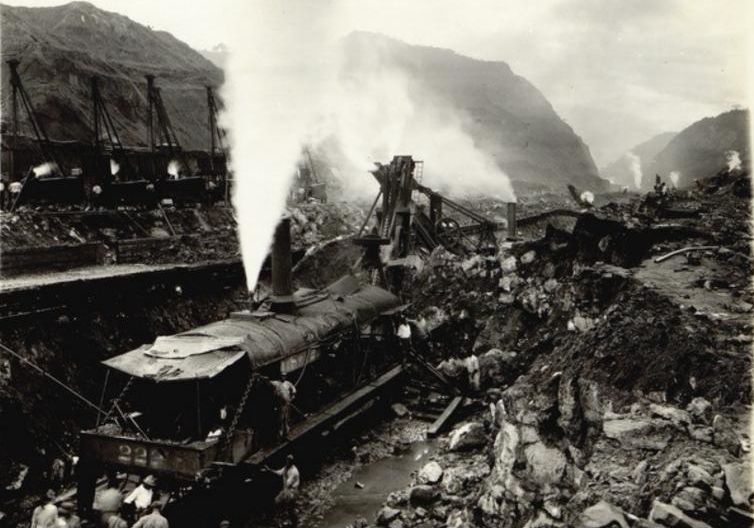
USDh, sUSDh and $TEN
Official icons for exchanges, wallets, trackers and listings. Upload the SVG where it's accepted, otherwise the 256px PNG.


Token names keep their case everywhere, including tickers, labels and all-caps headings.
- USDhLent to the US government
- sUSDhStaked USDh
- $TENHamilton
Colour
Night and paper are the grounds. Green is USDh and the US government. Brass is your dollar.
Brass leads. It stands for your dollar: on a reading screen it marks one thing; as a full field it is saved for big moments. Tap a colour to copy it.
Text, secondary grounds and the coins.
Our signature surface: a full field of brass with engraving lines drifting across it, like light on a struck coin. Use it full-bleed for big moments: the intro, campaign screens, event backdrops. Never put body text on it, and never under the portrait at partial opacity.
Typography
Three typefaces, each with one job. All three are free on Google Fonts.
Titles, the one big line on each screen, and the numbers that matter. Regular weight only.
Sublines, body copy, buttons and forms. Medium for buttons, Regular for everything else.
Eyebrows, captions, footnotes and data. 11 to 13px, a little tracking. Never for body copy.
Section titles share one size, sublines share one size. No one-off sizes.
Voice
Hamilton talks like a lender explaining a loan to a friend. Plain words, real numbers, nothing that wouldn't hold up if someone checked.
The line. It says what Hamilton does and where the money goes.
The turn. Every stablecoin holder is already lending. Hamilton pays the lender: prizes on USDh, yield on sUSDh.
The choice between USDh and sUSDh, in three words.
The idea everything else rests on.
Every line holds up if a careful reader checks it. Nothing that isn't live yet.
That's the frame. Say who borrows, what they pay and who gets it.
Words a non-finance reader knows. No jargon when a plain word exists.
One idea per sentence. Numbers instead of adjectives.
Each of these promises something that isn't true, or isn't true yet.
From $1Photography
Show what the loan built, not the money.
Our subject is what governments build with borrowed dollars. Archival first, real places, real dates. Every caption is a fact with a source, and every photo is credited.
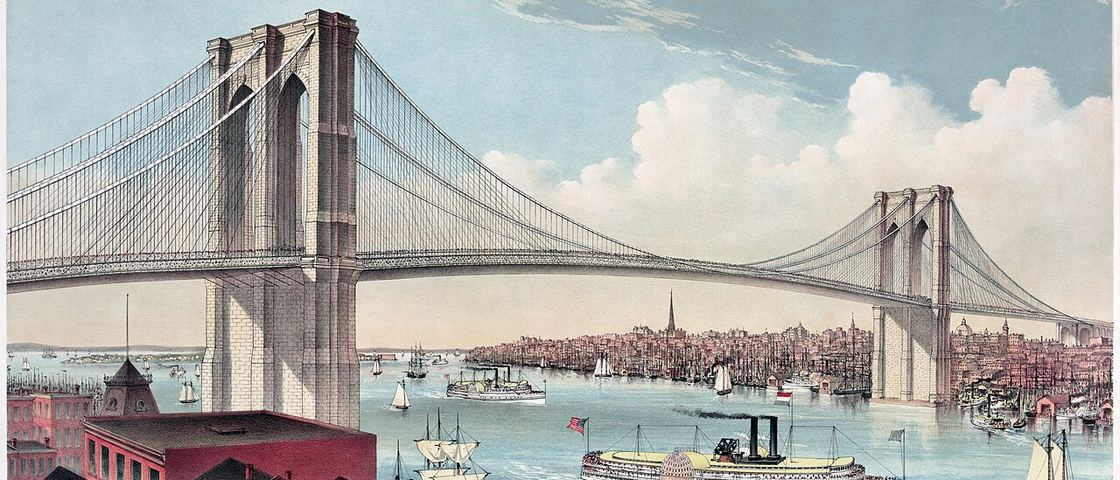
Brooklyn Bridge
New York and Brooklyn paid for it with city bonds. The 1883 print puts the total cost at $15 million.
Currier & Ives, 1883 · public domain · Source: Library of Congress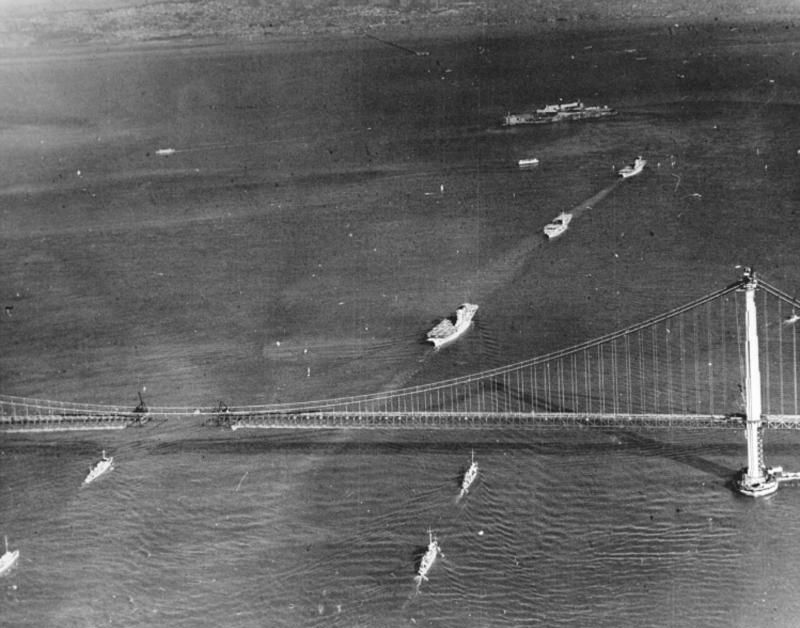
Golden Gate Bridge
Voters approved $35 million in bonds in 1930. Tolls paid back the principal and nearly $39 million of interest by 1971.
US Navy, 1936 · public domain · Source: goldengate.org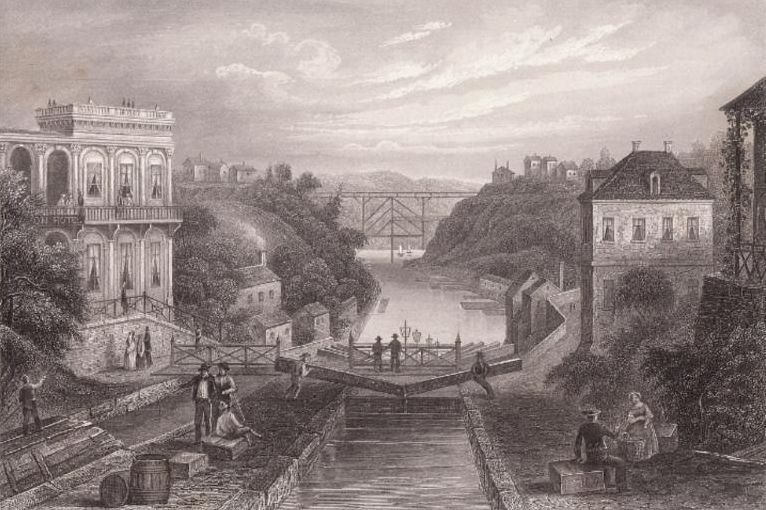
Erie Canal
New York borrowed $7 million in bonds to dig 363 miles of canal. Tolls paid it back.
Herrmann J. Meyer, c. 1855 · public domain · Source: NYC Municipal Archives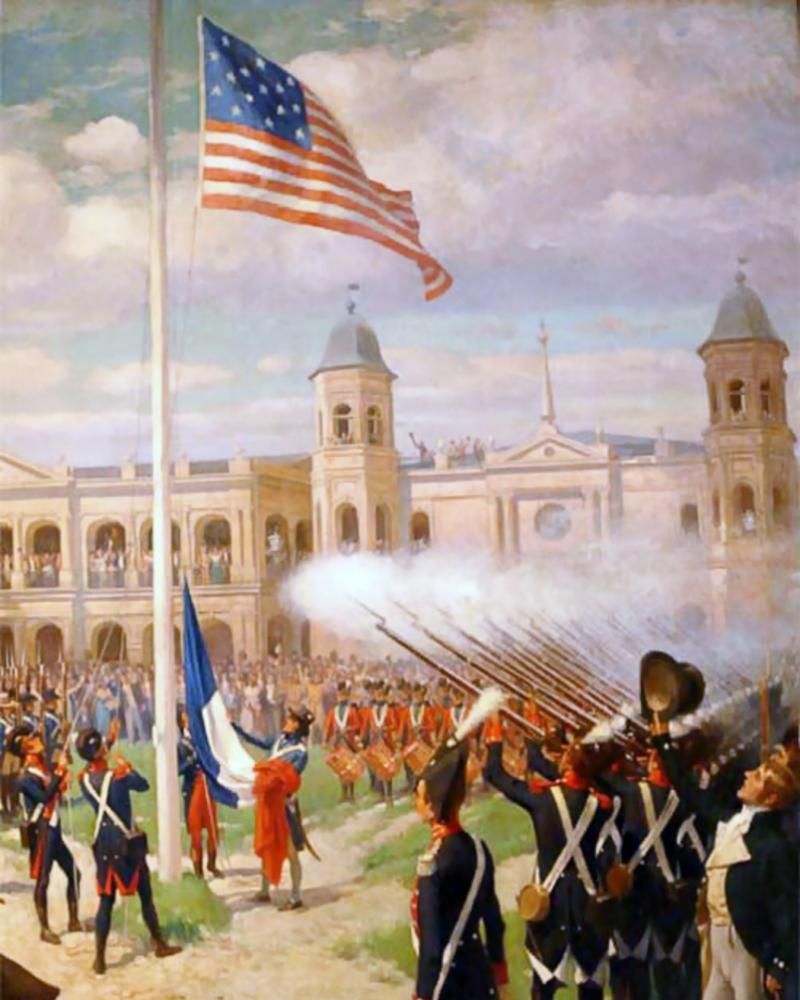
Louisiana Purchase
Of the $15 million price, the US paid $11.25 million in 6% government bonds, sold to investors through Hope & Co. and Barings.
Thure de Thulstrup · public domain · Source: The Baring ArchivePanama Canal
Paid for in part with about $134.6 million of Panama Canal bonds, issued in 1906, 1908 and 1911.
Ernest Hallen, 1913 · public domain · Source: The Herbstman Collection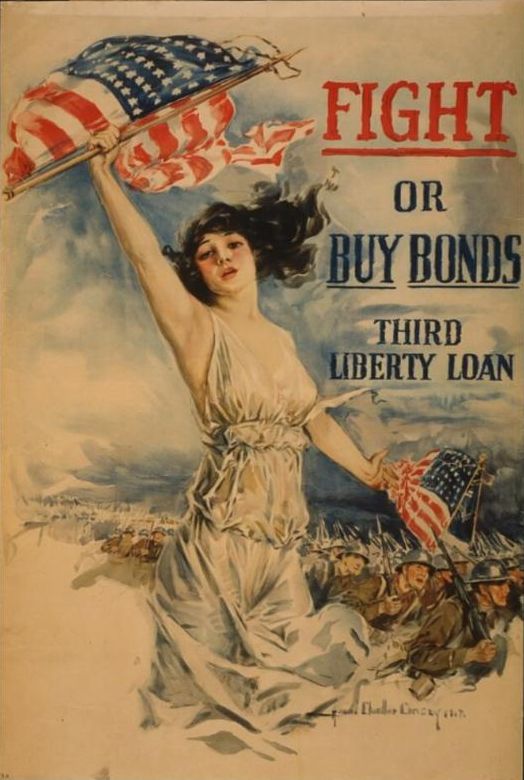
Liberty Loans
Poster for the Third Liberty Loan. The Second alone sold bonds to about 9.4 million Americans.
Howard Chandler Christy, 1917 · public domain · Source: Annual Report of the Secretary of the Treasury, 1917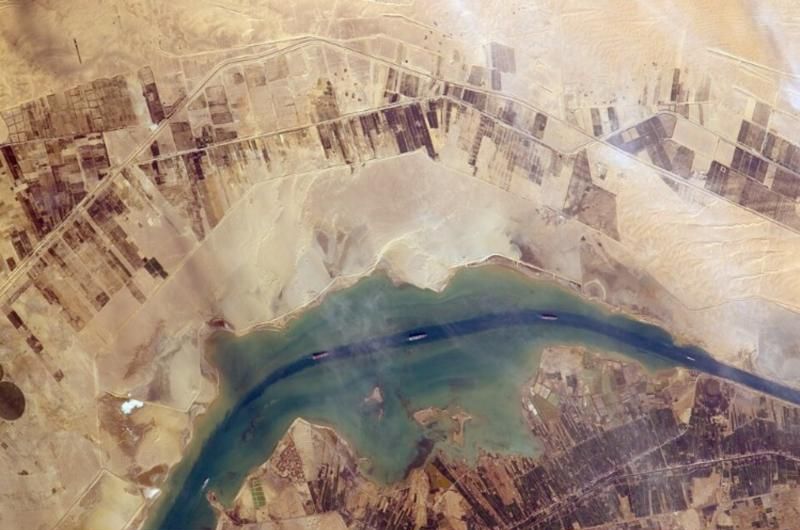
Suez Canal
About 1.1 million holders lent EGP 64 billion, about $9 billion, in eight days to expand the canal. The certificates paid 12%, raised to 15.5% in 2016, and were repaid in full in 2019.
NASA / Tim Kopra, 2016 · public domain · Source: Ahram OnlineBlack and white, shadows lifted to night, highlights warmed to brass. It ties two centuries of pictures into one look and keeps colour for the product.
- Bridges, canals, ports, railways, power: the things loans paid for
- Archival photographs, engravings and posters in the public domain
- A dated, sourced caption under every image
- Wide frames with room for type
- Coins, piles of cash or gold bars
- Banknotes: the $100 hero footage is the only one
- Stock photos of people smiling at phones
- Politicians or leaders as the subject
- Third-party logos or brand names in frame
Motion
Your dollar is a brass dot. Everything else moves to make room for it.
Every visit opens with a field of brass that shrinks to a single dot and drops into the full stop of the headline. That dot is your dollar. 2.7 seconds, once per visit, skipped by any scroll, tap or key.
The portrait draws itself row by row, top to bottom, like a coin being struck. Used once, where the mark first appears.
The rules every moving screen follows.
Time decides how. Only bars, fills and counters follow the scroll exactly.
Words never sit half-faded. They arrive with a timed tween and stay.
Motion starts on frame one. Nothing holds still long enough to look broken.
A fade is not a scene. Each moving section tells its own small story, once.
Respect reduced motion: show every final state, move nothing.
2.7s · lockedReveal0.6s · cubic-bezier(.2,.7,.2,1)Bars strike in36ms per rowHover0.2s easeLive pulse2s loopInterface
The pieces every Hamilton screen is built from.
Each token owns its button. Green to get USDh, ink to stake it. On night, stake turns paper. Across the site the two actions are Earn yield and Enter the Draw: Earn yield always comes first. The homepage hero has one button, Earn yield.
Rates carry an (i) with the full disclosure. Live figures carry a green pulse. Brass marks the one number that matters on the screen, here the 7%.
Amounts in the serif, tokens with their icon and exact name.
USDhsUSDhCopy-paste CSS for engineers and AI agents. These values are the source of truth.
Print and events
Files for printers, sponsors and event organisers. Send the PDF: it's vector, so it prints sharp from a business card to a stage backdrop. Every file here and the full print spec are in the kit download.
Portrait above the wordmark, for badges, booth panels, roll-ups and square slots.


For screen print, lanyards and stamps. The bars draw the light on his face, so on light grounds the bars are cut out of a solid tile, and on dark grounds the bars are printed and the ground does the tile's job. Never print bars-only on a light ground: the face turns into a negative.


A simplified portrait with 24 heavier rows and no hairlines. Use it below 10mm in print, and for all embroidery from 40mm wide.


Starting values only. Approve a printed proof before any run, brass first. The Pantone picks are closest matches to check against a swatch book.
| Colour | Hex | CMYK start | Pantone to check |
|---|---|---|---|
| Brass | #D3AE63 | 0 18 53 17 | 7562 C · metallic 871 C for foil |
| Night | #0E1412 | 60 40 50 100 rich black | Black 6 C |
| Hamilton green | #1F5A43 | 80 25 70 45 | 3435 C or 342 C |
| Continental blue | #1D2B4A | 95 75 30 40 | 533 C |
| Paper | #FBF6EC | Unprinted warm white stock | none |
Two layers: the foil (portrait bars and full stop, marked in black) sits on the printed night tile and wordmark. Smallest foil portrait: 20mm wide.


Hamilton on the left when we're the paying sponsor, on the right on a partner's own materials.

- A 1pt vertical rule between the logos, as tall as the portrait tile, with one tile-width of space on each side.
- Match the partner logo to the height of the word "Hamilton", not the tile.
- Write "Hamilton × Partner" with the multiplication sign.
- Never lock the portrait to another mark or place it inside their shape.
Clear space on every side equals the height of the portrait tile.
| Logo | 25mm wide in print · 24px tall on screen |
| Portrait | 10mm in print · 16px on screen |
| Simplified portrait | 6mm in print · 40mm for embroidery |
| Foil portrait | 20mm |
The full-colour logo on night. Hamilton and the partner alternate in a checkerboard, so any crop of a photo shows both.
PartnerPartnerPartnerPartnerPartnerPartnerPress
Copy-ready descriptions for articles, listings and partner pages.
Hamilton builds USDh and sUSDh. USDh is a dollar stablecoin lent to the US government and backed 1:1, and holders get a chance to win USDh every month, paid from the interest. sUSDh is staked USDh, lent to other governments in dollars only. USDh is issued by Hamilton Digital Assets Ltd., a British Virgin Islands company. Every payment to holders is made onchain.
Hamilton, USDh, sUSDh, TEN and the Hamilton portrait are trademarks of Hamilton Labs.
Coupons
Bonds used to come with coupons you tore off to collect the interest. Ours point the way to the rest of Hamilton: a number, where it goes, and what it does.
A Dutch water board borrowed 1,000 guilders to fix a dike. 378 years later, the bond still pays interest. Yale owns it, and collected 12 years of interest in 2015. Source